
Corlicyte®
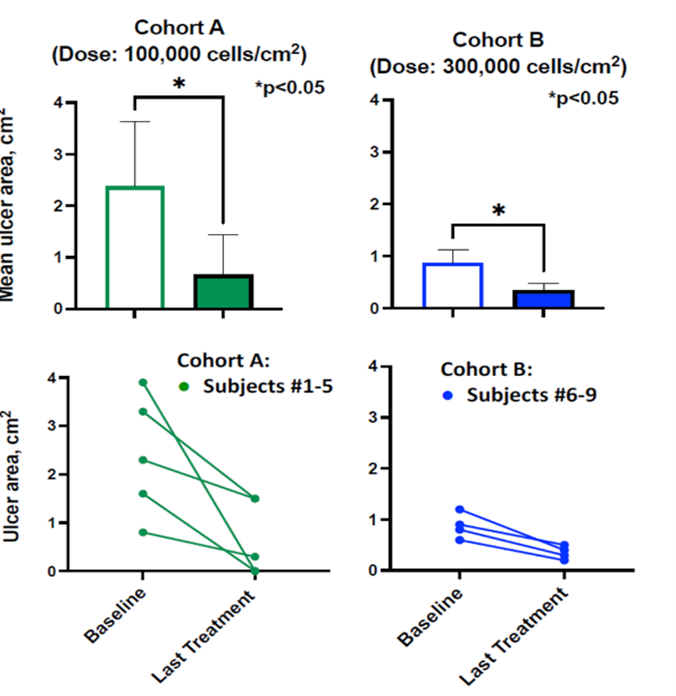
A Phase I study for Corlicyte® was conducted in collaboration with the University of Colorado Anschutz Medical School to look at the safety and tolerability in chronic diabetic foot ulcer. The results of the study showed no treatment-related adverse events and additionally all patients saw a reduction in their wound size during the treatment phase.
Corlicyte® is in preparation for Phase II in chronic diabetic foot ulcer and CRT is also looking at studies in other chronic wound conditions and beyond.
Corlicyte® is a cryopreserved formulation of human mesenchymal stem cells for therapeutic use. Corlicyte® is in initial development for chronic wounds, particularly diabetic foot ulcer, burns and cartilage repair.
Mesenchymal stem cells (MSCs) are stromal cells (i.e., associated with tissue and organ rather than blood) and have the ability to differentiate into a number of different tissue types. As stem cells they have significant potential to elicit a response via paracrine signalling, exosome production and systemic effects such as stimulating new blood vessel formation.
The mesenchymal stem cells within Corlicyte® have been optimised to produce high levels of growth factors and cytokines with wound healing and anti-inflammatory properties. These proteins have important roles in the inflammatory, proliferative, and remodeling phases of wound healing, particularly in chronic wounds where the normal biological processes may have become stagnant.
To date Corlicyte® has been tested in a Phase I study at the University of Colorado Anschutz Medical School. In the study 9 patients with a chronic diabetic foot ulcer (duration >2 months at start of treatment) had twice weekly application of Corlicyte® for a period of 8 weeks. The primary endpoint for this study was safety.
The results of this study showed zero treatment associated adverse events observed in any of the patients receiving treatment with Corlicyte®.
In addition, all patients had a reduction in wound size and 2 out of 9 patients treated saw a complete closure of the wound during the treatment period.
Beyond diabetic foot ulcer further studies are planned in adjacent chronic wound conditions such as chronic limb-threatening ischaemia and burns, following early success in case studies.
Corlicyte® is also being tested in pre-clinical models for cartilage repair, where it is planned for administration into the intra-articular space of the knee joint, to ameliorate the symptoms of injured tissue from a range of aetiologies.
Reference: Guillamat-Prats R. The Role of MSC in Wound Healing, Scarring and Regeneration. Cells. 2021 Jul 8;10(7):1729